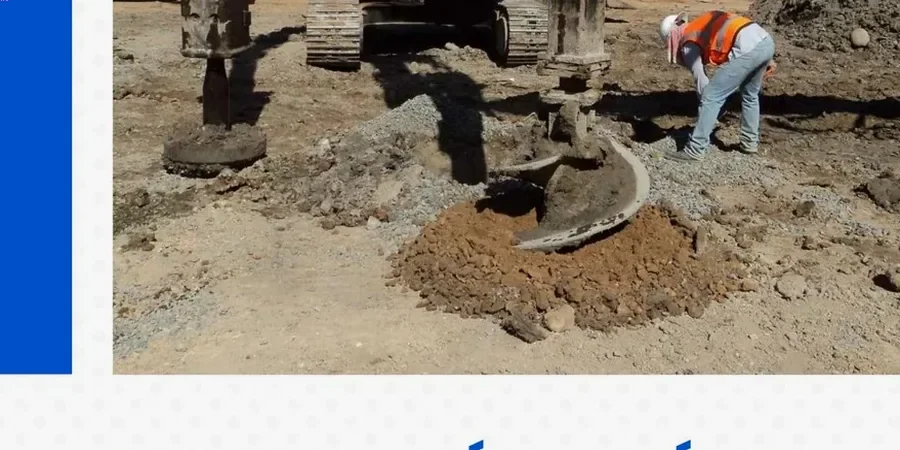
The mistake we see repeatedly on Grand Rapids projects is assuming a uniform bearing stratum exists just because the site looks flat. Glacial outwash and post-glacial lake deposits along the Grand River created a subsurface puzzle: dense sands abut soft, compressible clays within the same city block. A standard footing on these soils risks excessive settlement, and deep foundations aren’t always the most practical fix. Stone column design offers a middle path. By installing compacted aggregate columns through the weak zone, we transfer load to firmer layers while densifying the surrounding matrix. For sites near Mill Creek or in the Monroe North area, we often recommend combining this approach with a CPT test to map the transition between lacustrine clays and the underlying glacial till before finalizing the column grid.
A well-designed stone column grid in Grand Rapids glacial deposits can cut total settlement by half compared to untreated ground, without the cost of a full deep foundation system.
How we work
Grand Rapids sits on a complex glacial geology: the Saginaw Lobe left behind a mix of well-drained outwash sands and poorly consolidated lake-bottom silts. The contrast is stark — a site on the northeast side might encounter loose sands that densify well under vibration, while a lot in the Black Hills neighborhood hits saturated cohesive soils where drainage and consolidation dominate the design logic. In our experience, effective stone column design here must account for both seasonal groundwater fluctuation and the layered stratigraphy typical of the Kent County drift. We size the column diameter based on in-situ modulus, specify clean, angular aggregate per ASTM D448 gradations, and model the composite ground behavior using unit cell settlement analysis. The column spacing, typically 5 to 8 feet on center, is calibrated so the improved ground meets the allowable settlement criteria defined in the project’s geotechnical baseline report.
Site-specific factors
The variability between the west side and the Fulton Heights area tells the story. West-side sites near the river often contain thick deposits of compressible silty clay; untreated footings here can expertise differential settlement exceeding 1 inch over a 30-foot span. Fulton Heights, perched on slightly higher ground, may have a shallow sand crust that masks a soft layer just 8 feet down. Skipping a targeted ground investigation leads to under-designed stone columns — or worse, columns placed where they aren’t needed, wasting budget. A second pitfall is post-installation heave if the soil contains expansive fines. Our design protocol includes Atterberg limits testing and consolidation data to flag these layers early, adjusting the installation energy and drainage path so the treated zone remains stable through freeze-thaw cycles that Grand Rapids sees from November through March.
FAQ
What does stone column design cost for a typical Grand Rapids commercial site?
The design phase, including site investigation, laboratory testing, and engineering analysis, typically ranges from US$1,480 to US$5,230 depending on the number of soil borings required and the complexity of the column grid. This does not include the contractor's installation cost, which is bid separately. We carry out a fixed-fee proposal after reviewing the project's geotechnical scope.
How long does the design process take from start to approved plans?
Once subsurface data is available, we typically deliver the stone column design package within 10 to 14 business days. If new borings are needed, the fieldwork adds approximately one week, followed by two weeks for laboratory testing and engineering analysis. Rush turnaround is available for projects facing construction schedule pressure.
Are stone columns a permanent solution in Grand Rapids' freeze-thaw climate?
Yes, when designed correctly. The columns extend well below the frost penetration depth and the aggregate is free-draining, which prevents frost heave within the treated mass. We specify a surcharge or a competent crust layer above the columns to protect the top zone from seasonal moisture cycling. Thousands of stone column installations across the upper Midwest, including many in Grand Rapids, have performed reliably for decades under these conditions.