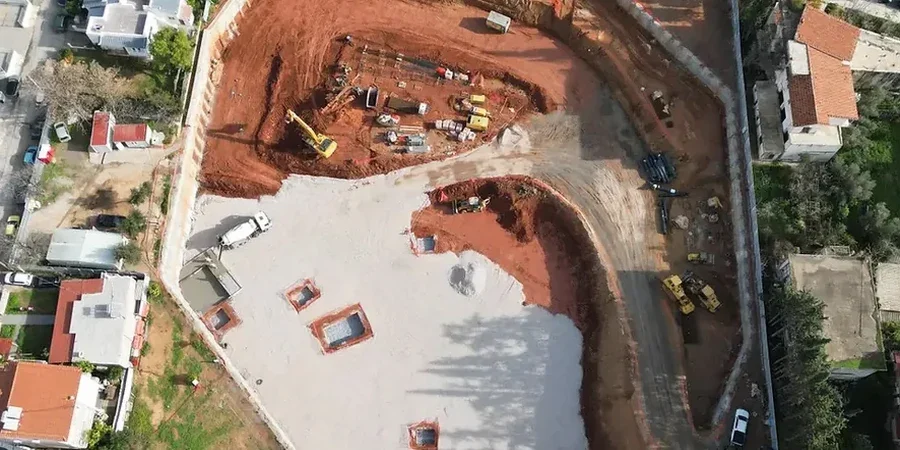
Last fall we reviewed a project on Monroe Avenue where the contractor had water seeping into a 22-foot excavation before the second strut was even installed. Grand Rapids has this tricky mix of glacially overridden sand and clay that changes every half mile, and when you dig below the water table near the Grand River, you are basically working inside a leaky sieve. A proper geotechnical design of deep excavations here is not optional; it is the only thing between a dry, stable cut and a flooded mess. By combining local boring logs with the right earth pressure model, we define the shoring system so the contractor can work safely through Michigan’s freeze-thaw cycles. We often pair this with a CPT test when the stratigraphy needs a continuous profile, especially where the upper sand transitions into the younger glacial till that covers much of Kent County.
In Grand Rapids, the Grand River floodplain geology demands that every deep excavation design accounts for seasonal groundwater fluctuation—ignore it and you’ll be pumping from the first cut.
Site-specific factors
Grand Rapids sits at an elevation of roughly 640 feet, and the 100-year floodplain of the Grand River cuts right through the urban core. That elevation is not just a number on a map—it means that a 25-foot excavation in the Monroe North neighborhood is within a few feet of the river’s seasonal high. Without a geotechnical design of deep excavations that models the flood-stage groundwater, the bottom of the cut can blow out hydraulically, and the street behind the wall starts to settle. We have seen smaller excavations lose several inches of lateral movement in a single weekend because the tieback bond zone was placed in a silt layer that lost strength once the soil moisture increased. In Grand Rapids, the risk is not hypothetical; the combination of high groundwater, soft glaciolacustrine deposits, and aging adjacent utilities makes an under-designed excavation a liability that moves fast.
FAQ
What is the typical cost for a deep excavation design in Grand Rapids?
The fee for a geotechnical design of deep excavations in the Grand Rapids area generally ranges from US$1,850 for a straightforward single-tier soldier pile wall to around US$8,300 for a complex multi-level bracing system with groundwater modeling and construction-stage stability analyses. The exact number depends on the excavation depth, proximity to the Grand River floodplain, and the required level of monitoring integration.
How do you account for the high groundwater along the Grand River?
We use historical groundwater data from the MDEQ well database and supplement it with on-site piezometer readings taken during different seasons. The design includes a groundwater model that simulates river stage fluctuations, and we specify cutoff walls, dewatering well systems, or bottom seals depending on the soil permeability and the allowable settlement behind the wall.
Do you handle the submittal to the City of Grand Rapids?
Yes. Our stamped design package follows the city’s engineering review checklist and includes the required calculations for surcharge, global stability, and construction-phase monitoring. We have worked with several Grand Rapids structural engineers and contractors, so we know what the plan review division looks for in shoring submittals.