← Home · Roadway

Flexible Pavement Design in Grand Rapids

Together, we solve the challenges of tomorrow.

LEARN MORE →

We see it all the time in Grand Rapids: a parking lot shows fatigue cracking after just two winters. The asphalt thickness looked right on paper, but the subgrade support wasn't what the designer assumed. The Grand River cuts through a glacial outwash plain here. Subgrades shift from loose sand to silty clay within 500 feet. That variability demands more than a catalog cross-section. Our flexible pavement design work starts with in-situ CBR testing to map strength across the site. When the soil profile is erratic, we run grain-size analysis to confirm drainage potential. The city of Grand Rapids sees 64 inches of snow a year. Freeze-thaw cycles punish poorly drained bases. We build the layer coefficients and structural number around local climate data, not generic tables.

A flexible pavement fails from the bottom up. If the subgrade strain exceeds the endurance limit, the asphalt thickness doesn't matter.

How we work

The most common mistake we see in Kent County is ignoring the perched water table. A contractor excavates to subgrade in August, sees dry sand, and skips the underdrain. By March the pavement is pumping fines through the joints. Our design protocol always includes a saturation check. We model the asphalt concrete modulus at mid-summer temperatures — Grand Rapids hits 90°F pavement surface — and verify the fatigue life using the Asphalt Institute transfer functions. For granular base layers, we specify a minimum CBR of 30% or reject the material. The resilient modulus of the subgrade is measured with repeated load triaxial, not correlated from index properties. That gives us a reliable structural number. We layer the section so that the tensile strain at the bottom of the asphalt stays below 70 microstrain for high-traffic corridors like 28th Street or Alpine Avenue. A plate load test on compacted subgrade confirms the modulus before the first lift of binder goes down.
Flexible Pavement Design in Grand Rapids
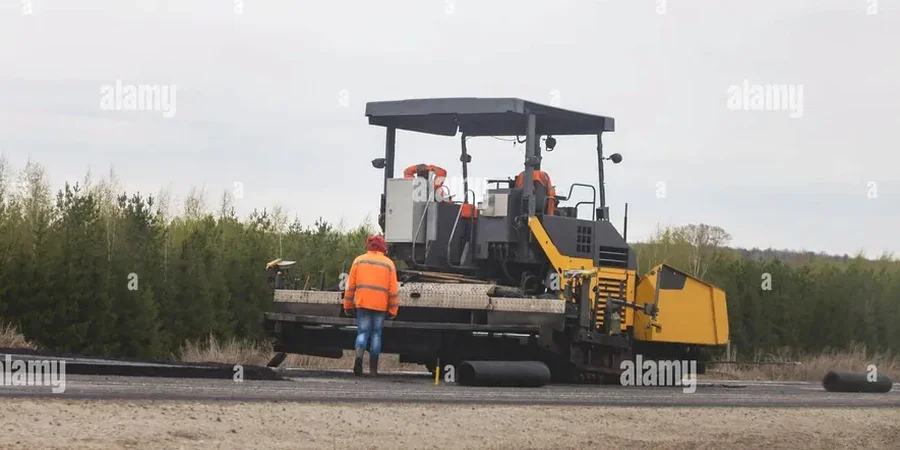
Technical reference image — Grand Rapids

Site-specific factors

AASHTO Guide for Design of Pavement Structures (1993) requires a drainage coefficient adjustment. In Grand Rapids, ignoring it is reckless. The water table sits within 3 to 6 feet of the surface across much of the city. Saturated fine sands lose half their resilient modulus. We apply a drainage coefficient of 0.80 for poorly drained sections, which increases the required structural number by 20% or more. The IBC snow load provisions don't address pavement, but the freeze-thaw cycling does: frost heave can differential-lift a pavement by 2 inches in one season. We specify a non-frost-susceptible base extending below the frost line. Skipping the subsurface drain in this climate guarantees premature distress. The initial cost savings disappear by year five when the alligator cracking spreads.

Need a geotechnical assessment?

Reply within 24h.

Email: contact@geotechnicalengineering1.org

Watch the video

Typical values

ParameterTypical value
Design methodologyAASHTO 1993 / MEPDG Level 2
Asphalt modulus (20°C)450,000 – 650,000 psi
Subgrade resilient modulus (Mr)5,000 – 15,000 psi typical
Terminal serviceability (pt)2.5 for major arterials
Reliability level90% for urban principal, 85% for collector
Drainage coefficient (mi)0.80 – 1.00 based on saturation
Frost penetration depth42–48 inches in Grand Rapids
Minimum HMA thickness4 inches for residential, 6+ for arterial

Complementary services

01

Subgrade Evaluation

In-situ CBR, DCP, and resilient modulus testing to map subgrade strength across the alignment.

02

Layer Coefficient Design

Optimized asphalt, base, and subbase thickness using AASHTO 93 equations and local material calibration.

03

Drainage Analysis

Groundwater monitoring and permeability testing to assign drainage coefficients and design edge drains.

04

Construction QA/QC

Nuclear density testing, asphalt core verification, and proof rolling to confirm design assumptions.

Regulatory framework

AASHTO Guide for Design of Pavement Structures (1993), ASTM D2487 (Unified Soil Classification), ASTM D1586 (Standard Penetration Test), ASTM D1883 (CBR of Laboratory-Compacted Soils), ASTM D7369 (Resilient Modulus of Soils)

Frequently asked questions

What does flexible pavement design cost for a commercial parking lot in Grand Rapids?

Design fees for a typical commercial lot (20,000–60,000 sq ft) range from US$1,810 to US$5,310, depending on the number of subgrade borings, traffic analysis complexity, and drainage conditions. This covers field investigation, lab testing, structural analysis, and stamped construction drawings.

Why is the resilient modulus test important for Grand Rapids soils?

The resilient modulus captures how the soil behaves under repeated traffic loading, not just static strength. In Grand Rapids, where sandy subgrades can lose stiffness when saturated, a correlation from CBR alone can overestimate support by 30%. Direct measurement avoids under-designing the asphalt thickness.

How many years should a well-designed flexible pavement last here?

A properly designed arterial pavement with a structural number calibrated for Grand Rapids climate can achieve a 20-year design life before major rehabilitation. Parking lots and residential streets typically target 15 years, assuming regular crack sealing and seal coating every 5 years.
Location and service area

We serve projects in Grand Rapids and surrounding areas.

View larger map