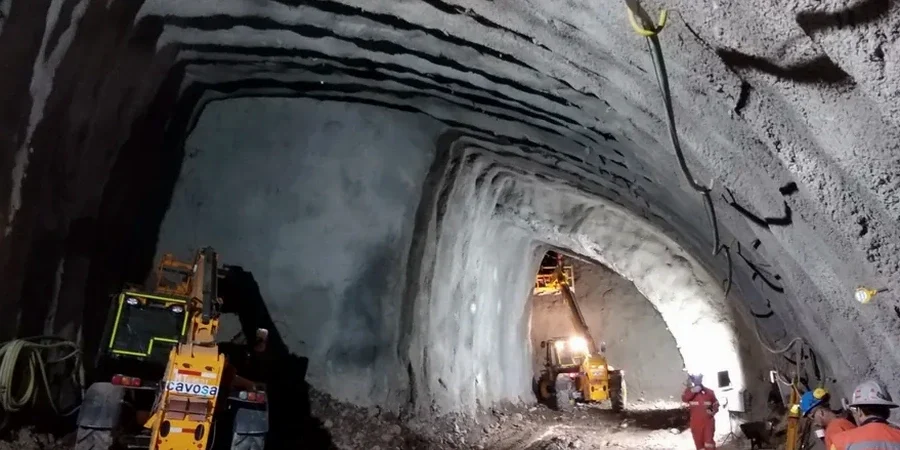
ASCE 7 and the International Building Code set clear requirements for subsurface exploration, but around Grand Rapids the real challenge is the ground itself. Much of the city sits on glacial outwash and lacustrine clays deposited by the retreat of the Lake Michigan lobe, producing the soft, squeezing soils that complicate tunnel drives. A CPT test provides continuous stratigraphy without sample disturbance, which is critical when the target is a tunnel horizon that may vary by mere feet. Because the Grand River has reworked these deposits for millennia, the team cross-references CPT soundings with laboratory index tests to avoid surprises during excavation. Local knowledge of the valley fill—from the upland moraines of Kent County down to the floodplain—informs every boring plan. The result bridges code compliance and ground truth, reducing risk from the earliest design phase.
In Grand Rapids, the difference between a trouble-free drive and a stuck TBM often comes down to 5 feet of clay that nobody logged.
FAQ
What is the typical cost range for a soft ground tunnel geotechnical investigation in Grand Rapids?
Most investigations for a short to medium-length tunnel in Grand Rapids fall between US$4,200 and US$18,790. The final figure depends on the number of borings, the depth to bedrock, and the laboratory testing suite required.
Why are the glacial clays along the Grand River so challenging for tunneling?
These clays are normally consolidated or lightly overconsolidated, with low undrained shear strength and high sensitivity. When disturbed, they lose structure rapidly and can squeeze into the excavation face, making face control and ground support critical from the portal to the reception shaft.
Which ASTM standards apply to a soft ground investigation for a tunnel?
ASTM D1586 governs the standard penetration test, ASTM D2487 covers the Unified Soil Classification System, and ASTM D4767 provides the procedure for consolidated-undrained triaxial compression tests on cohesive soils.
How many borings are recommended for a tunnel alignment in Grand Rapids?
There is no fixed number; the spacing depends on the variability of the glacial stratigraphy. In the Grand River corridor, where soil types can change within 200 feet, borehole spacing of 100 to 300 feet is common, with CPT soundings placed between borings to fill in the stratigraphic gaps.