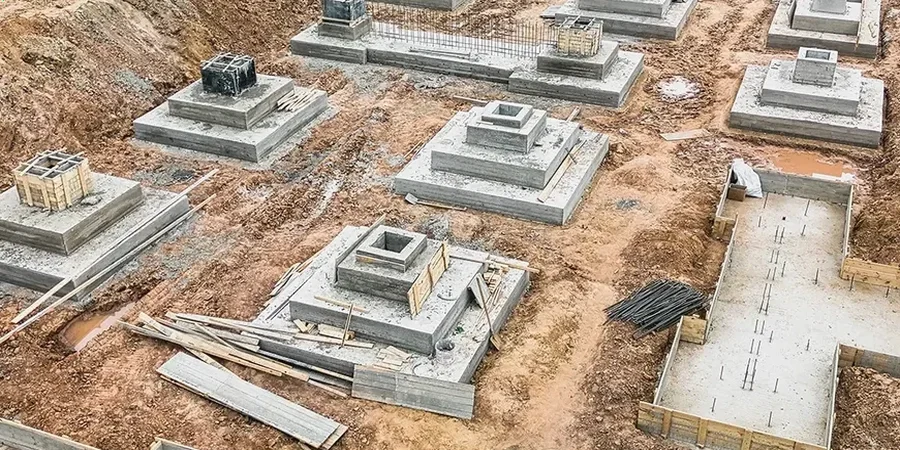
In Grand Rapids, the legacy of the Grand River and its glacial past is written into every jobsite. We routinely encounter a challenging subsurface mix of dense till, outwash sands, and pockets of soft lacustrine clay that can ruin a conventional footing. When a structure demands absolute reliability on this erratic ground, the conversation turns quickly to deep foundations. Our team approaches pile foundation design not as a commodity but as a tailored engineering exercise, integrating site-specific stratigraphy with structural loads to select the right pile type, whether driven H-piles, open-ended pipe piles, or augered cast-in-place systems. The goal is always to find competent bearing below the zone of seasonal moisture variation and frost action, ensuring decades of settlement-free performance in West Michigan’s demanding soil conditions.
A solid pile foundation design in Grand Rapids must transfer loads through the loose alluvial cap into the dense glacial till or bedrock below—anything less is a risk we refuse to take.
How we work
Grand Rapids sits at an elevation of roughly 640 feet along the banks of the Grand River, a waterway that has deposited layers of loose alluvium over dense glacial drift. A pile foundation design here must account for a groundwater table that often sits within 8 to 12 feet of the surface and seasonal fluctuations that can alter effective stress. We build our designs on a foundation of rigorous subsurface data, pairing in-situ penetration testing with laboratory analysis to define pile capacity, settlement behavior, and group efficiency. The design process evaluates the practical constraints of urban job sites in neighborhoods like Heritage Hill, where vibration limits may dictate the use of drilled shafts over driven piles to protect adjacent historic masonry structures. Every recommendation we make balances geotechnical capacity, constructability, and the economic reality of the project budget.
FAQ
How much does a pile foundation design typically cost for a commercial project in Grand Rapids?
For a typical commercial or light industrial building in the Grand Rapids area, a complete pile foundation design package—including geotechnical analysis, pile type selection, capacity calculations, and stamped construction drawings—generally ranges from US$1,550 to US$6,380. The final cost depends on the number of piles, the complexity of the soil profile, and whether lateral load analysis or dynamic testing oversight is required.
How do you determine if a site needs a deep foundation (piles) versus a shallow foundation?
The decision hinges on the soil stratigraphy and the load requirements. If our subsurface investigation reveals weak, compressible soils within the zone of influence of a shallow footing, or if the water table is high and requires expensive dewatering, we perform a comparative settlement analysis. When total or differential settlement exceeds tolerable limits for the structure—typically 1 inch for most buildings—we recommend transitioning to a pile foundation design that transfers loads to a deeper, more competent stratum.
What information do you need from me to start the pile design process?
We will need the architectural and structural plans showing column locations and estimated service loads, the results of any prior geotechnical borings on the property, and the project address in Grand Rapids so we can review USGS soil maps and local well logs. If no recent subsurface data exists, we can scope and manage a new boring and in-situ testing program to gather the SPT N-values and soil samples necessary for a defensible design.